

Most people panic a little after hearing the words bone graft”. Well it is fair, the word does sound intense but let me tell you ,it is not as scary as it sounds, and needing one before your dental implant does not mean you are in trouble. It usually just means your jaw needs a little preparation before the real dental implant process begins.
Bone grafting works as a strong foundation for dental implants, this little preparation can enhance the longevity of your implant procedure.
So let me explain what is actually going on and why this step.
The Jaw Does Something Most People Never Think About
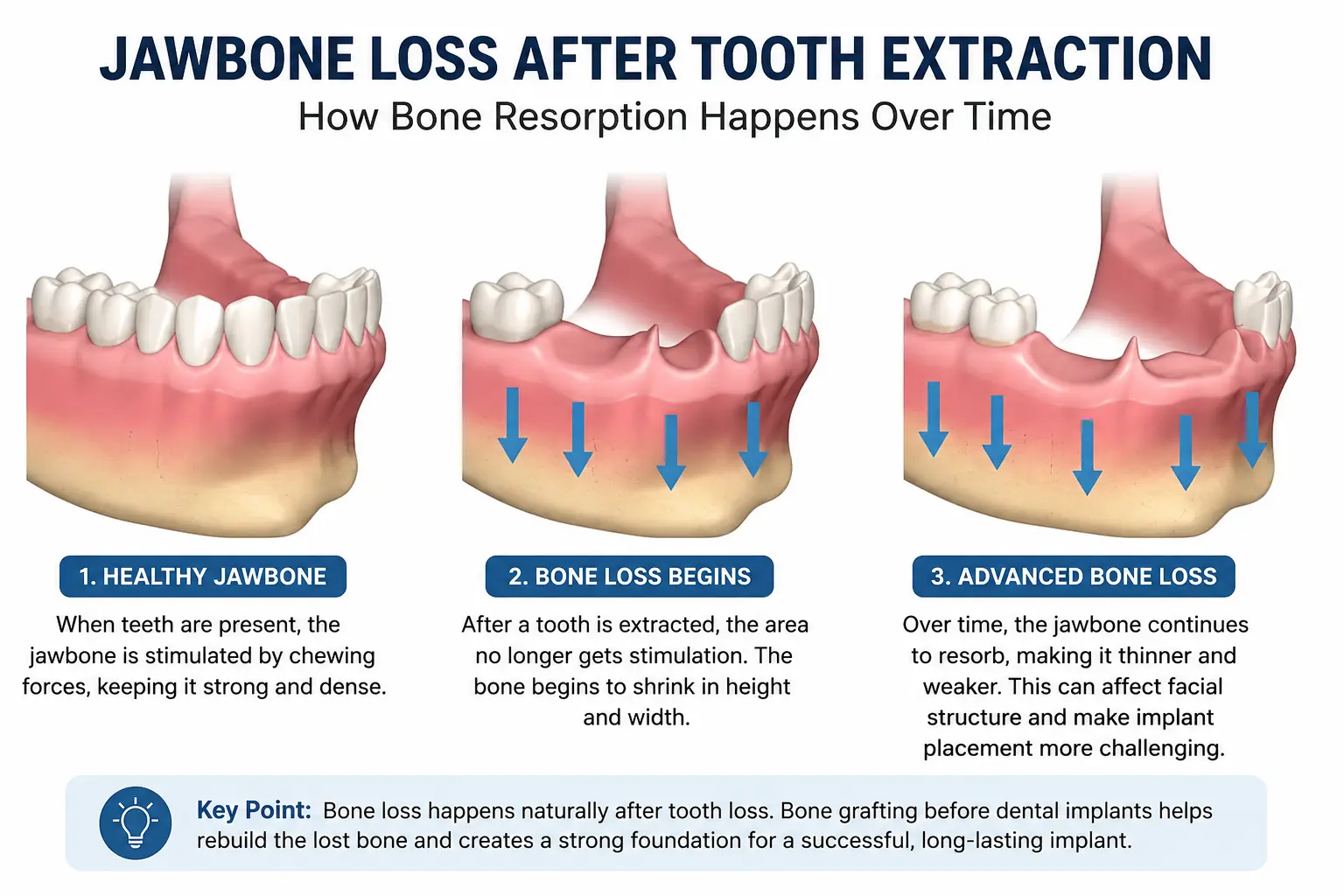
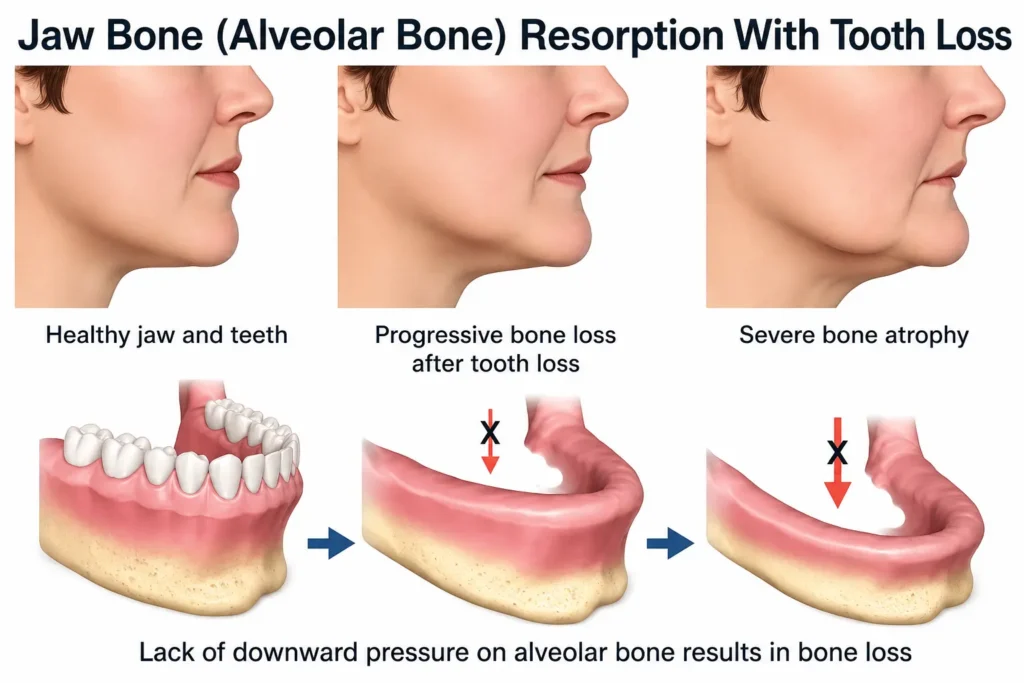
Here is something interesting most patient have never thought about , they believe the jawbone just sits there passively but the truth is everytime you chew your food , took the first bite of your fruits or even just clench your jaw in anger or fear , your jawbone is being stimulated by that pressure. This pressure is what signals the bone to keep renewing itself and stay dense.
So when a tooth gets extracted or you lose, that area of the jaw stops getting that signal. And the body, being the magical efficient system that it is, starts slowly breaking down the bone it no longer sees a use for. The minerals get redirected. The ridge begins to shrink. First it gets narrower. Then shorter. This process is called bone resorption and it happens quietly, without pain, without any obvious warning signs.
By the time someone decides they want an implant, sometimes a year or two after losing a tooth, quite a bit of that bone may already be gone. That is not anyone’s fault. It is just the nature of our biology.
This is exactly why bone grafting before dental implants becomes necessary for so many patients. The implant needs a certain amount of bone to anchor into. Without it, there is simply nothing solid enough to hold onto.
How Does the Dentist Even Know If You Need One?
A valid question. This is not something a dentist guesses at. Before recommending a dental bone graft procedure, your dentist will take proper imaging of the jaw. Usually this means dental X-rays and most likely a CBCT scan, which is essentially a 3D picture of the bone. It shows the exact width, height, and overall quality of what is there.
If your dentist sees that the bone is too thin or too weak and shallow to safely hold an dental implant then they recommend dental grafting as the best next step. As placing an implant into bone that cannot support it would mean a failed implant, and nobody wants to go through that process twice.
The reasons behind the bone loss vary from person to person. Prolonged tooth loss is the most common. Gum disease is another big one. Advanced periodontitis does not just affect the gums. It quietly destroys the bone underneath, and by the time the infection is under control, the damage to the jaw bone density and jaw bone volume can be significant. Facial injuries, past infections, and even certain medical histories can all play a role too.
What Bone Grafting Actually Involves
So if i have to explain bone graft process to a patient it would be this : When a dentist see an empty tooth socket or a shallow bone structure in your jawbone area where you want a dental implant , the dentist start the bone graft process by adding bone material in that specific part of the jaw. This material doesn’t work as a replacement of your lost bone structure but acts as a framework,something your own bone cells can grow into and around over time. As healing progresses, your body slowly replaces the graft material with real, natural bone. The result is a jaw that is stronger and ready to hold an implant the way it should.
Now you may wonder what this graft material is made from? Well there are a few different options to choose from and your dentist will explain which makes the most sense for your case.
- An autograft uses bone from your own body, usually taken from the chin or the back of the jaw. This is considered the most naturally compatible option since it is literally your own tissue. The downside is that a second area needs to be operated on.
- An allograft uses donor bone that has been carefully processed and sterilized. It works very well and is one of the most commonly used options today because it skips the need for that second surgical site.
- A xenograft uses bone material from animal sources, typically bovine bone or porcine bone , which has a surprisingly similar structure to human bone and integrates predictably.
- Then there are alloplastic grafts, which are fully synthetic materials like hydroxyapatite, lab-made substances that the body accepts and responds to by laying down new bone.
What the Day of the Procedure looks like :
Walking into a procedure without knowing what to expect is stressful. So here is a straightforward picture of what the dental bone graft procedure actually looks like.
You come in, your dentist reviews your health history and your scans one more time, Then local anaesthesia goes in to numb the area. You should not feel pain during the procedure itself.
Once you are numb, a small incision is made in the gum to access the bone. The graft material is placed carefully into the area that needs building up. A collagen membrane is usually placed over the top of it. Think of this membrane as a protective cover. It keeps soft gum tissue from growing into the graft site too early and allows the bone regeneration process to happen the way it needs to.
Then the gum is stitched closed, and that is essentially it for the day.
The first few days after are when most of the discomfort happens. Swelling is normal. Some bruising too. A bit of tenderness when you eat or speak. None of this is alarming. It is the body responding to the procedure. Your dentist prescribed medications will be enough to rescue you from the pain. It is very important to follow the post-operation instructions of your dentist.
Then comes the waiting.The bone needs anywhere from three to nine months to properly form and mature before the implant can go in. Your dentist will monitor the healing with follow-up imaging and let you know when things are ready.
Does the Graft Always Have to Happen Separately from the Implant?
Not always. There are situations where a graft and an implant can be done in the same appointment. This is most common when a tooth is being extracted and the surrounding bone is still fairly intact. A socket preservation graft placed immediately after extraction can protect the ridge and, in some cases, the implant itself can go in right then if conditions are right. This approach is called immediate implant placement and it saves time when it is clinically appropriate.
But when there is more significant bone loss, the staged approach is the right call. Graft first, wait for solid bone formation, then place the implant. Yes, it takes longer. But doing it this way gives the implant the best possible environment to integrate into and last properly.
Why Not Just Skip the Graft and Place the Implant Anyway?
This is a question patients do sometimes ask. And it is understandable because nobody wants more appointments and more waiting time.
But placing an implant into bone that cannot support it is a bit like trying to screw something into a wall that has no solid material behind it. It might go in, but it will not hold. The failure rates for implants placed without adequate bone support are significantly higher, and when an implant fails, the experience of dealing with it is far more involved than just waiting a few extra months from the start.
Something Patients Often Do Not Expect
A lot of people who go through bone grafting say afterwards that the experience was much easier than they anticipated. The idea of it sounds daunting. The reality, for most patients, is a manageable procedure with a predictable recovery.
Your oral health has a ripple effect on more than just your teeth. The way you chew, the way you speak, the way you feel walking into a room, all of it is connected.It is a decision that affects daily function and long-term wellbeing.
In Closing
If bone grafting has been mentioned in your treatment plan, we genuinely hope this has helped bring some clarity. It is not a detour. It is the right road. Your dental team recommending this step means they are looking at the full picture and prioritising an outcome that will actually last.
At Smile Signature Dental Clinic in Kolkata, every patient gets a proper explanation of their treatment plan, why each step is being recommended, and what to expect at every stage. If you have been told you need bone grafting before dental implants, or if you are just starting to look into implants and want honest guidance, we are here for that conversation.
Frequently Asked Questions
1. Why is bone grafting before dental implants necessary?
Bone grafting before dental implants is necessary when there is not enough healthy jawbone to support an implant securely. The graft helps rebuild lost bone and creates a strong foundation for long-term implant success.
2. How do I know if I need a dental bone graft procedure?
Your dentist will evaluate your jawbone using dental X-rays or a CBCT scan. If the bone is too thin, weak, or has shrunk due to tooth loss, gum disease, or injury, a dental bone graft procedure may be recommended before implant placement.
3. Is bone grafting before dental implants painful?
The procedure is typically performed under local anaesthesia, so you should not feel pain during treatment. Mild swelling, tenderness, and discomfort are normal for a few days afterward and can usually be managed with prescribed medication.
4. How long does it take to heal after a dental bone graft procedure?
Healing time varies from person to person, but most bone grafts require between three and nine months to fully integrate with the jawbone before a dental implant can be placed.
5. What materials are used for bone grafting?
Bone grafts may use your own bone (autograft), donor bone (allograft), animal-derived bone (xenograft), or synthetic materials (alloplastic grafts). Your dentist will recommend the most suitable option based on your condition.
6. Can bone grafting and dental implant placement be done on the same day?
In some cases, yes. If there is enough healthy bone remaining, a graft and implant may be placed during the same appointment. However, significant bone loss often requires the graft to heal first before implant placement.
7. What happens if I do not get a bone graft before a dental implant?
Without adequate bone support, the implant may fail to integrate properly with the jawbone. Bone grafting helps create the stability needed for a successful and long-lasting implant.
8. Is bone grafting safe?
Yes. Bone grafting is a well-established and commonly performed dental procedure with a high success rate when carried out by an experienced dental professional and followed by proper aftercare.
9. Can jawbone loss occur after tooth extraction?
Yes. After a tooth is lost or extracted, the jawbone in that area no longer receives stimulation from chewing forces. Over time, the bone can begin to shrink through a process called bone resorption.
10. How successful is bone grafting before dental implants?
Bone grafting has a very high success rate and significantly improves the chances of successful dental implant treatment by ensuring there is enough healthy bone to support the implant.